Wednesday, November 3, 2010

Thursday, 04 November, 2010: A1 Class

At the beginning of class, I tried to check your homework, and discovered that not a single person had done it, which is actually fine, since this term, I'm starting to give you grades, and part of your grade will be a homework grade, so if you don't do your homework, it's actually not my problem; it's yours.

Then, we talked a little about Sir Arthur Conan Doyle.  He is a Scottish author who wrote Sherlock Holmes.  Then, we read a part of "Scandal in Bohemia" and talked about some of the vocabulary:

lined with -->  the material on the inside of your jacket, pants, etc (so, we can say "lined with silk", or "lined with faux fur", etc)
flame-coloured --> a very intense red
richness --> having wealth or great possessions; of great value or worth
limbs -->arms and legs
barbaric --> the quality of being a barbarian; not civil
barbarian --> a person who is not civil (remember Marie's story about the Ancient Greeks and how they didn't understand what their enemies were saying because it all sounded like "bar bar bar" to them, so they called them "the people who say 'barbar'", which is how we got out word "barbarian")
barbaric richness --> crudely rich, over-the top, too much
hid --> from "hide, hid, hidden"
over the top --> too much
straighten --> straight (Adj) + en = straighten (V), to make straight
aristocrat --> noble person, like royalty
nod -->  move your head up and down to show assent
identify --> figure out what something is
remark --> say
pace --> walk back and forth as you think about a problem
sprang --> from "spring, sprang, sprung", to jump up quickly
indeed --> certainly, in fact, for certain, definitely
your majesty --> the way to address a king or queen

Double Breasted (1)

Double Breasted (2)

Fur-lined

Collar

Cuffs

Cloak (1)

Cloak (2)

Don't forget your homework!
You don't exactly have any homework, today, but I don want you to take a look at the post titled "Conversation Topics: Clothes and Character", before class on Saturday.

Thursday, 04 November, 2010: A2 Class

In this lesson, we reviewed the article "School of the Air", and then we talked about some vocabulary to introduce the article about Beethove on page 14.

calm -->  free from excitement; tranquil; still or nearly still
lonely --> a depressing feeling of being alone
pessimistic --> gloomy; thinking the worst will happen
cheerful --> happy
depressed --> extremely sad
angry --> mad
sad --> unhappy
confused --> perplexed or bewildered; not know what is happening
joyful --> happy, full of joy
optimistic --> take a favourable view of events; expect good things to happen
upset --> to disturb mentally or emotionally; perturb
excited --> emotionally stirred, agitated
heroic --> something a hero does


Don't forget your homework!
Using three of the vocabulary words from today, write three sentences. (Due on Saturday)

Wednesday, 03 November, 2010: A2 Class

In this lesson, we read and talked about the article "School of the Air".

air --> what is all around us, what we breathe, what we need to live
the air -->the radio.  Invisible radio waves travel through air to your radio so you can hear the news and music.
You are on the air.  -> You are on the radio.

Then, we made a word web.  We brainstormed all the words we could think of that had to do with school:

SCHOOL: quiz / think / IQ / computer / cafeteria / book / notebooks / lessons / pens / pencils / eraser / bag / backpack / ruler / homework / listen / teacher / weekends / write / students / exercise / school days / tests / learn / time / secrets / security / tables / desks / toilets / gym / janitors / class / flowers / lesson planning

Finally, we read the article "School of the Air", and talked about some difficult vocabulary:


resources --> a source of supply or aid to help you accomplish something (resources include things like a computer, the internet, books, pens, pencils, paper, people, etc)
prepare --> get ready for something.  Teachers prepare lessons.  Students prepare for a test.
communicate --> talk with someone through talking, writing, etc.
fax --> like a big telephone that allows you to send documents (letters)
isolated --> very remote; far from other people.
attend --> go to
each --> every
nearest --> closest
area --> a big space of land, possibly like an aimag
kind --> type
private --> individual, personal, not public
provide --> give

We also learned the expression "I have a bone to pick with you."  If I say this to you, it means that I'm going to pick a little fight with you because something you have done troubles me.  In this instance, my bone which I have to pick with you involves the fact that nobody does their homework for my class.  However, since starting next term, I will be giving grades for my English class, and since part of your grade will be based on your homework, the fact that you don't do my homework is no longer my problem, it's yours.  Good day.

Wednesday, 03 November, 2010: A3 Class

In this lesson, we read about a TV show called "The Wallace Family".  We talked about some vocabulary wordsand we practiced some reading comprehension.  Then, we did a speaking exercise in partners.


Don't forget your homework!
Write a description of your family.  Write at least five (5) sentences.

Wednesday, 03 November, 2010: C1 Class

In this lesson, we talked about three unusual pets, we did a listening exercise, we practiced asking questions and answering in complete sentences and we practiced describing pets (what they look like, what they eat, where they live, etc).


Vocabulary:

Iguana

Glass Cage

Hedgehog

Spikes

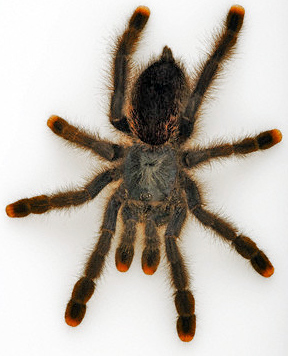
Tarantula

Hairy Legs

Sand

Caterpillar

Worm

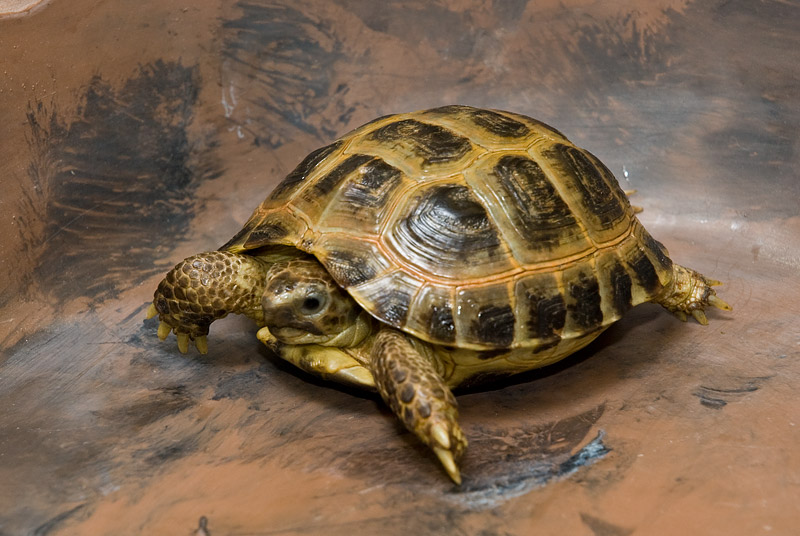
Tortoise


We practiced asking and answering some questions:

Whose pet is Harriet?  Harriet is Maggie's pet.
Who's got a pet iguana?  Kamal has a pet iguana.
Where does Harriet live?  Harriet lives in a box in the garden.
etc

Then, we practiced describing the pets and what they eat:

Iggy the iguana has a long green body, short legs, a small head, and a long tail.  Iggy eats leaves and fruit.
Harriet the hedgehog has a small round body with spikes on it, and white hair on her stomach.  Harriet eats worms and caterpillars.
Terry the tarantula has eight long hairly legs and eight eyes.  He eats insects.

Wednesday, 03 November, 2010: C2 Class

In this lesson, we learned some vocabulary:

Stove

Sink

Drawer

Wardrobe

Upstairs

Downstairs

Wall

Dining Room
Then, we practiced some grammar.  We learned subject pronouns, object pronouns, possessive adjectives, and possessive pronouns.  The subject pronoun goes before the verb, and the object pronoun goes after the verb:

I saw John. / John saw me.
You saw John. / John saw you.
He saw John. / John saw him.
She saw John. / John saw her.
It saw John. / John saw it.
We saw John. / John saw us.
They saw John. / John saw them.

Here are the possessive adjectives and the possessive pronouns:

That's my house.  It's mine.
That's your house  It's yours.
That's his house.  It's his.
That's her house.  It's hers.
That's its house.
That's our house.  It's ours.
That's their house.  It's theirs.

Monday, November 1, 2010

Tuesday, 02 November, 2010: Grades 2 and 3

In this lesson, we reviewed our ABCs and the sounds that each letter makes.  Then, we reviewed three-letter words that have the short /o/ sound and we practiced some dictation of some /o/-words:


god / hot / job / jot / got / lox / mob / mop / rot / sod / yop


For the last ten minutes of class, we started to practice words that have the short /u/ sound:


bud / cud / dub / gut

Tuesday, 02 November, 2010: C3 Class

In this lesson, we reviewed how to show that something belongs to someone:

It's Wendy's ball.
It's Oscar's umbrella.
It's Lin's hat.
etc.

We also learned how to answer the question: "Whose is this?":

It's Marie's.
It's John's.
It's Blake's.

Then, we had some fun with tongue twisters.  We practiced the tongue twister which was in our book and I taught the class the first two lines of "Peter Piper":

Peter Piper picked a peck of pickled peppers.
A peck of pickled peppers, Peter Piper picked.

At the end of class, we moved on and talked about some new vocabulary:

Bathroom
Bedroom
Dollhouse
Garden
Kitchen

Living room
Bathtub
Bed
Doll

Swing

Chair
Bookcase  

At the very end of the lesson, we talked about some colour words:

brown

red

yellow

pink

blue

green

white

black

Tuesday, 02 November, 2010: B1 Class

In this lesson, we reviewed the article "School of the Air".  We reviewed the difficutl vocabulary from yesterday (resources / prepare / communicate / fax / strange / isolated / attend), and we talked about some new difficult vocabulary from the article:

each --> every
nearest --> closest
area --> a big space of land, possibly like an aimag
kind --> type
private --> individual, personal, not public

After we finished the "School of the Air" article, we started to read an article about Beethoven.  Some words that came up in the Beethoven article were:

heroism --> the act of being a hero
pneumonia --> a very bad flu (if it is serious enough, people can die from it)
eldest = oldest
success --> having accomplished very impressive achievements
joyful --> the quality of being very happy
published --> have your writing printed in a book or magazine which is sold to the public
Mozart --> another famous composer; Beethoven's teacher
optimistic --> positive, thinking good things will happen
deep feelings --> very serious feelings


Mozart

Beethoven

Beethoven Action Figure-- Beethoven is a hero, too!

Tuesday, 02 November, 2010: B2 Class

In this lesson, we reviewed family trees.  Nomikaa drew her family tree on the chalkboard, and we practiced asking questions about her family tree, ex:

Who is Nomin-Erdene?
She is my aunt.

Then, we learned about some ways to describe people:

long hair
short hair
dark hair --> brown, dark brown, or black hair
fair hair --> blond or red hair
blond hair --> "yellow" hair
grey hair --> grey, white, or silver hair
beard --> the hair that grows on a man's chin
moustache --> the hair that grows on a man's lip

Also, I taught the class about the order to put our words when we describe someone's hair:

(1) length + (2) colour + (3) hair
eg.  long dark hair, short grey hair, short blond hair, long fair hair, etc

Finally, we reviewed the verb "HAVE" and practiced describing people, eg:

Erdine has short grey hair.

Sunday, October 31, 2010

Monday, 01 November, 2010: B2 Class

In this lesson, we talked about family and family trees.  We looked at Peter's family tree in our textbook, and I drew my own family tree on the chalkboard.  We practiced asking and answering questions like this:

Who's Marie's [grandmother]?
Marie's grandmother is Pearl.

Who's Doug?
Doug is Marie's uncle.

Be careful!  The 's on "Marie's" is not short for the word "is".  Here, 's shows possession or relationship:

Marie's grandmother =/= Marie is grandmother
Marie's grandmother = the grandmother of Marie

Don't forget your homework!
In class, I drew my family tree on the chalkboard.  Now, it's your turn!  Draw your family tree in your notebook.  Be sure to include your grandmothers, grandfathers, mom, dad, aunts, uncles, brothers, sisters, and cousins.

Monday, 01 November, 2010: B1 Class

In this lesson, we read about where the students stay at home and have their lessons on the radio.  Some vocabulary we learned:

air --> what is all around us, what we breathe, what we need to live
the air -->the radio.  Invisible radio waves travel through air to your radio so you can hear the news and music.
You are on the air.  -> You are on the radio.

Then, we made a word web.  We brainstormed all the words we could think of that had to do with school:

SCHOOL: quiz / think / IQ / computer / cafeteria / book / notebooks / lessons / pens / pencils / eraser / bag / backpack / ruler / homework / listen / teacher / weekends / write / students / exercise / school days / tests / learn

Finally, we read the article "School of the Air", and talked about some difficult vocabulary:


resources --> a source of supply or aid to help you accomplish something (resources include things like a computer, the internet, books, pens, pencils, paper, people, etc)
prepare --> get ready for something.  Teachers prepare lessons.  Students prepare for a test.
communicate --> talk with someone through talking, writing, etc.
fax --> like a big telephone that allows you to send documents (letters)
strange --> different or weird
isolated --> very remote; far from other people.
attend --> go to

Next time: we will re-read the article "School of the Air" and we will talk about it some more.

Monday, 01 November, 2010: A1 Class

In this lesson, we looked at page 14 in our textbook.  We reviewed the problems that Sally, Danny, and Tome have:

Sally is desperate because she has tried all the diets and does not know how to lose weight.
Danny is lonely because he does not fit in at school.
Tom is shy because he is afraid of making a fool of himself.

Then, we talked about advice we could give to Sally, Danny, or Tom.  After we gave our own idea for advice, we read an email to Sally in our textbook.  We talked about the advice and we looked at specific sentences that introduce advice and reasons for the advice:

Sentences to introduce advice:
What you should do is eat a healthy diet.
You could exercise more.

Sentences to introduce justifications/reasons:
If you do this, you'll soon lose weight.
That way, you'll burn calories.

Then, we talked about opening remarks and closing remarks:

opening remarks --> the things you write at the beginning of an email or letter
closing remarks --> the things you write at the end of an email or letter

Finally, we read part of a letter from a pen friend and we worked in pairs to brainstorm advice we could give this friend.


Don't forget your homework!
Write a reply to the pen friend we were talking about at the end of class.  Give advice and give your reasons for that advice.  Don't forget to include opening remarks, a main body, and closing remarks!

Monday, 01 November, 2010: A3 Class

In this lesson, we reviewed the question structure "Who is [PERSON]?" and how to answer this question:

Who is Peter's [grandmother]?
Peter's [grandmother] is [Jean].

Be careful, because even though there is an 's at the end of "Peter", it does not mean is.  This 's is used to show possession or relationship:

Peter's grandmother =/= Peter is grandmother
Peter's grandmother = the grandmother of Peter

We talked aboutwords to describe people:

dark hair --> hair that is brown, dark brown, or black
fair hair --> hair that is blond or red
blond hair --> hair that is "yellow"
red hair --> hair that is kind of orange
grey hair --> hair that looks anywhere from white to grey to silver, but we always only say "grey"
beard --> the hair that grows on a man's chin
moustache --> the hair that grows on a man's lip

Also, please be careful when talking about people's eyes.  We never say "black eyes", even if the eyes are very dark.  We always say "brown eyes" instead:

I have black eyes. (wrong)
I have brown eyes. (correct)

Beards

Moustaches

Scholarship Information for International Students to Study Abroad

Now is the time to start thinking about your future!  I know many of you are planning on going to university after high school.  I know that many of you are planning on attending universities in Mongolia, but I've heard a couple of students say that they want to study abroad, so I did just a (very little bit of) research and I found to websites to help you start looking at scholarship information:

Scholarship information for CANADA
Scholarship information for USA


Of course, this is just to help you get started, and it would be a good idea to check the websites of the schools you are interested in attending to see if there are other scholarship opportunities which are not listed on these websites or to keep your eyes (and ears) open for scholarships from within Mongolia to send Mongolian students abroad to study.


Also,if you have a question about studying in Canada or about university in general (such as what is university like, how should you study, what should you study, etc), don't be shy!  You can ask me, and I will do my best to give you the answers you need.  If I don't know the answer to your question, I will do my best to help you find the answer!

Discussion Topics: Clothes and Character

1) Who buys your clothing?  Where do your clothes come from?
2) Is your taste in clothes similar to your parents' taste in clothes?
3) Name some famous shoe brands.  Do you wear any of these?  What is your favourite style of shoe?  What do you think is the most fashionable brand of shoe?
4) Name some famous jeans.  Do you wear any of these?  Do you find jeans comfortable?  What is the most amount of money you would spend on a pair of jeans?
5) If two pairs of shoes were identical, what would be mroe important in deciding what to buy: cost or brand?
6) Do you think fashionable brands are worth their high price?
7) What are the most important concerns in choosing what to wear?
8) Do you think that you will change your style when you enter university or enter the workforce?
9) Does being cool depend on wearing certain brands?
10) Would you wear clothes or a style that you do not find attractice just because it is trendy?
11) What is more important: chracter or celebrity?
12) What is more important: wearing name-brand clothes or having a good personality?
13) What are the most important aspects of having a good personality?
14) Who is the best-dressed person in your class?
15) Who has the best personality in your class?

Vocabulary

It is time for twelve new vocabulary words.  Challenge yourself to learn them, use them when speaking in English with your teacher and with your friends, and use them in your writing!

phantasm (N.  Adj: phantasmal) something apparently seen, but without any true physical presence; an illusion of the brain; a ghost or spirit
Despite the reaction from others, Paula wasn't sure if she was experiencing a real explanation for what had happened, or just a phantasm of her imagination.

semblance (N.  Adj: semblable)  outward appearance; a representation or a copy of something else
Although the students were very excited, the principal was able to get them into some semblance of order.

short-lived (Adj.)  living or lasting only a short while; fleeting
The team's two-point lead was short-lived, for soon the other team got two baskets in a row.

transient (Adj.) passing in time, remaining or existing only briefly
When I was growing up, my family led a transient life.

transient (N.)  one who passes through without permanent bonds
When I was growing up as a transient, we moved to a new place every two or three years.

transiently (Adv.)  moving from place to place fairly often
The homeless person lived transiently, one night at a shelter and other nights flopping with a friend.

whimsy (N.  Adj: whimsical Adv: whimsically) a whim or an odd or fanciful idea; sometimes a quaint or unorthodox idea.
Acting upon mere whimsy, Francis went to talk to the principal, and his plans were, surprisingly, approved.

contingent (Adj.  N: contingency) (1) liable to occur, but not with certainty; possible, (2) dependent on conditions or occurrences not yet established
(1) Today's weather forecast includes a contingent chance of showers by evening.
(2) My cousin is a contingent worker; she works for a temporary employment agency.

episodic (Adj.  Adv: episodically)  relating to or happening in episodes
The made-for-television movie was episodic; that is, it was broadcast in sections rather than all in one night.

incidental (Adj.  Adv: incidentally) apt to occur in a minor or unpredictable manner
It was an incidental bother; only rarely did the turn signal stick while I was driving.

intermittent (Adj.  N: intermittence  Adv: intermittently)  stopping and starting at intervals
The news about the disaster was intermittent; the network fed the public information only a little at a time.

interrupt (V.  Adj: interrupted  N: interruption)  to break the rhythm or continuity; to stop the momentum or continuum
Because of the lightning, the officials had to interrupt the game.

oscillate (V.  N: oscillation  Adj: oscillating)  to move back and forth; to waver or doubt a decision
Amy was accepted to both Harvard and Yale and she oscillated between the two for a couple of weeks before she made her decision.

periodic (Adj.  Adv: periodically)  chracterized by a repeating cycle or repetition of intervals; appearing or occurring from time to time
Her visits to her grandmother are periodic.  Although there is no formal agreement between them, she visits nearly every other weekend.

Halloween Riddle #7

It may be Monday, 01 November in Mongolia, but it's still Halloween in Canada (where I come from), so here is my very last Halloween riddle:

Why didn't the skeleton cross the road?